Brecht Evens es un dibujante belga que vive y trabaja en París, conocido por sus narrativas gráficas pintadas que mezclan lo cotidiano con lo místico, incluyendo Panther, The Making Of, y The City of Belgium. Su obra más reciente, The Jellyfish King, es el primer volumen de una trilogía propuesta que sigue la vida de Arthur, un niño imaginativo que crece bajo el cuidado de un padre errático que está sumido en delirios paranoicos. Fue traducido del francés por el propio autor en colaboración con el dibujante François Vigneault, quien también realizó la letra de la edición en inglés, que sale el 6 de octubre de Drawn & Quarterly.
Recientemente Evens y Vigneault conversaron por video sobre la mezcla de texto e imágenes en el proceso creativo, la relación resbaladiza entre la imaginación, la paranoia y la psicosis en un mundo cada vez más obsesionado con las conspiraciones, los retos de equilibrar la simplicidad y el detalle en una narrativa visual, y cómo la paternidad reciente está influyendo en el trabajo de Evens en los volúmenes futuros de la serie.
This conversation has been edited for clarity and length.
François Vigneault: I was just rereading The Jellyfish King, and one of the very first things that the reader is going to see is the dedication, which is to your father, and it says, “To my father, who did not inspire this book.”
Brecht Evens: Sí. Como sabes, la dedicatoria francesa es “Pour mon père pleinement présent,” o “A mi padre, plenamente presente.”
Vigneault: Yes.
Evens: Con ello intentaba contrastarlo con el padre, en ocasiones, muy ausente en el libro, pero creo que mucha gente entendió eso como que mi padre está plenamente presente en este libro, así que lo hice un poco más explícito en la versión en inglés. Simplemente intento desvincularme de las suposiciones de que esto es un libro autobiográfico.
Vigneault: I’m sure he appreciates that you made that disclaimer at the beginning! So, what was the inspiration for this book? The Jellyfish King is a sort of Bildungsroman, it’s a story about fathers and sons, about allies and enemies, about education and ignorance. What was your inspiration for it?
Evens: Bueno, el primer germen de este libro apareció en un cuaderno, en 2012. Estaba entre libros, y a menudo hago pequeños gestos de escritura, a veces solo una frase, o a veces una idea pequeña. En este caso, un pequeño párrafo donde un niño nos cuenta sobre su verano. Se lee como un ejercicio de escritura que recibiría tras las vacaciones de verano. Y lo que cuenta es una mezcla de cosas que esperarías que dijera un niño, y cosas que esperarías que un niño inventara. Por ejemplo, hay un jardín, y hay un foso de serpientes para atrapar a los ladrones… cosas así.
A veces las ideas en cuadernos viejos me inspiran más adelante. Después de The City of Belgium, volví a abrir todos mis cuadernos. Para entonces, me preguntaba si podría hacer una historia inspirada en una psicosis que tuve, una experiencia paranoica, en la que creía que todo lo que veía decía relación conmigo mismo, que los anuncios y la señalización y todas esas cosas eran mensajes dirigidos a mí. Había algo muy hermoso y rico en esa experiencia y quería usarla.
Pero en mi experiencia, tuve esa psicosis cuando trabajaba en un encargo de ilustración muy lujoso en Tokio. Digamos que era un entorno muy exuberante y un protagonista muy privilegado. Esa es una de las razones por las que hacerlo, que se viera casi como lo real, era un callejón sin salida. Además, un contexto urbano sumamente estimulante, con el personaje principal que interpreta todo como importante… ¡esa es la receta para un libro de 10,000 páginas!
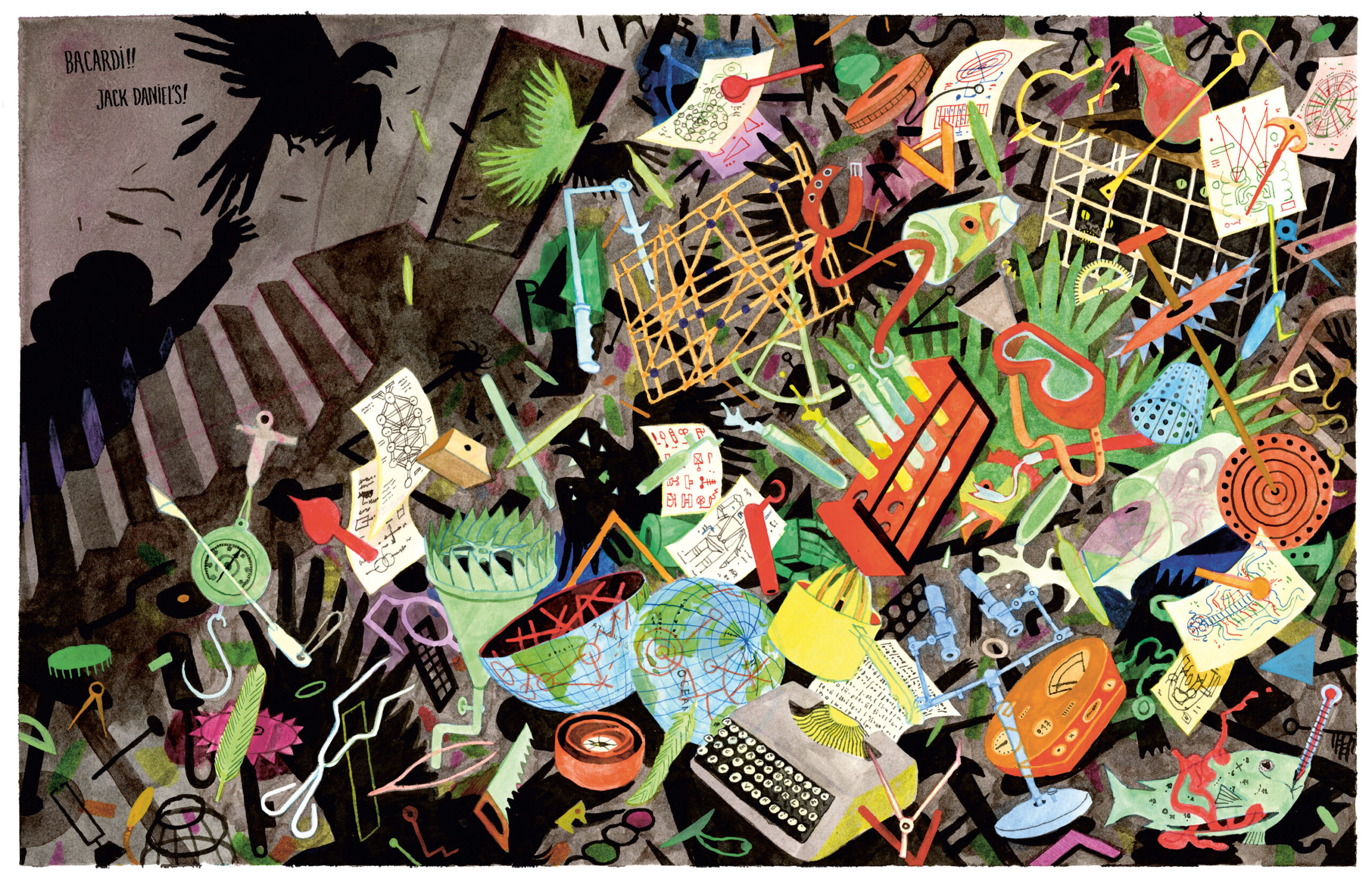
Así, con esa idea en la cabeza, me topé con ese pequeño párrafo del niño contando su historia poco creíble, pero también inquietante. Te preguntas qué es real, y te preguntas “¿Qué pasa con su padre? ¿Todo esto es seguro? ¿Qué está pasando en esta casa?” Sentí que ese es el personaje que puede vivir la experiencia paranoica. Y ese muchacho me invitó a tomar inspiración de mi propia infancia. Yo era un niño que hacía juegos de mesa, dibujaba cómics, y tenía un rango mucho más amplio de actividades e intereses que muchos adultos, ¿sabes? Tenía más tendencia a construir las cosas por mí mismo, a ser un poco más de un Puer Universalis o “niño renacentista”, como se menciona en The Jellyfish King.
Vigneault: I can see that is very fertile for you, that imagination of the child and the different directions that you can go in. And I think many readers will remember their own childhoods when looking at the story, and a sort of sense of limitless possibility. But then you have all that being fed by a father who, as you mentioned, might be suffering from psychosis, from paranoia, who sees enemies all around him. This relationship between the father and the son, their imaginations or their psychoses are kind of feeding each other, and it goes in a more dangerous direction.
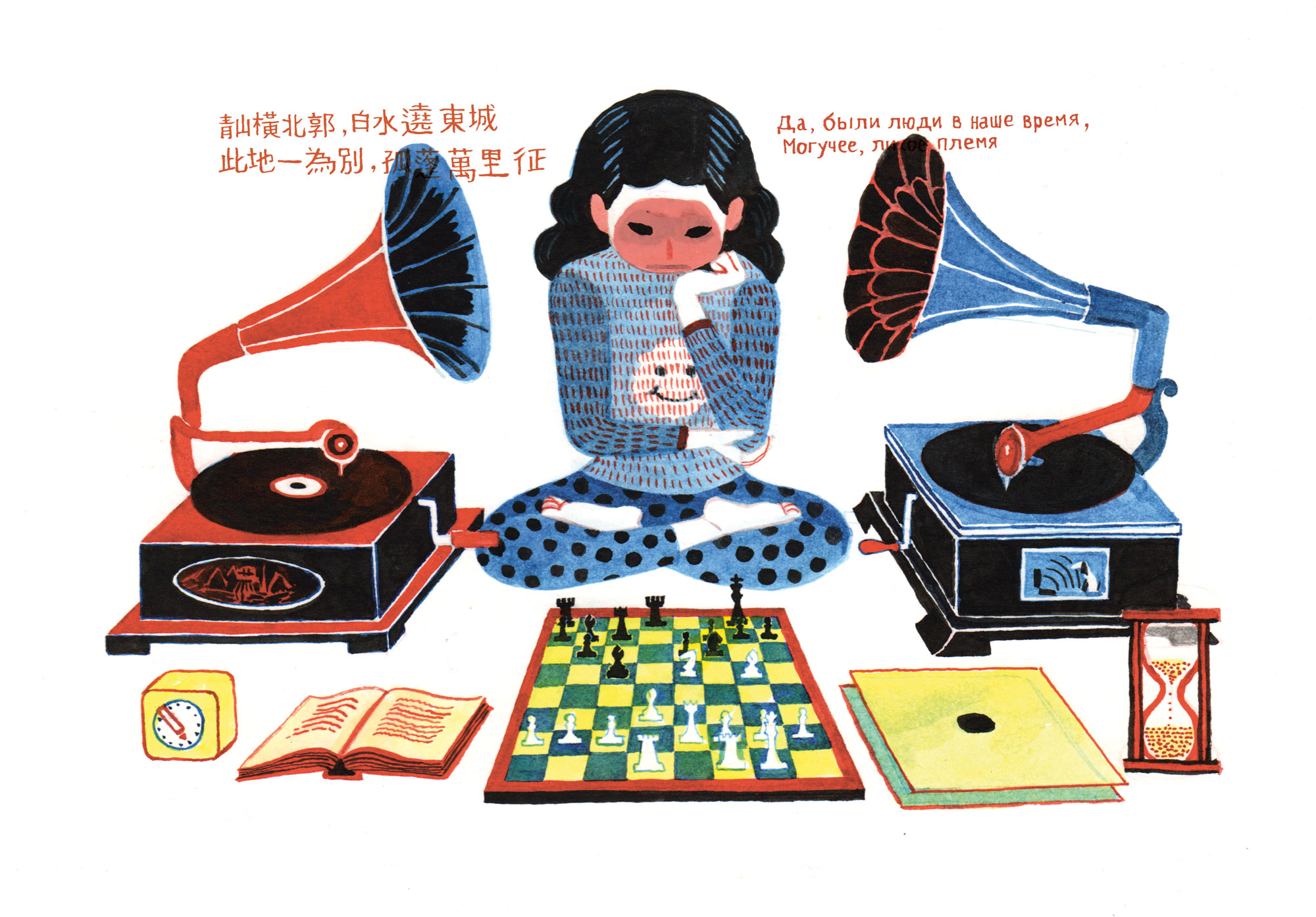
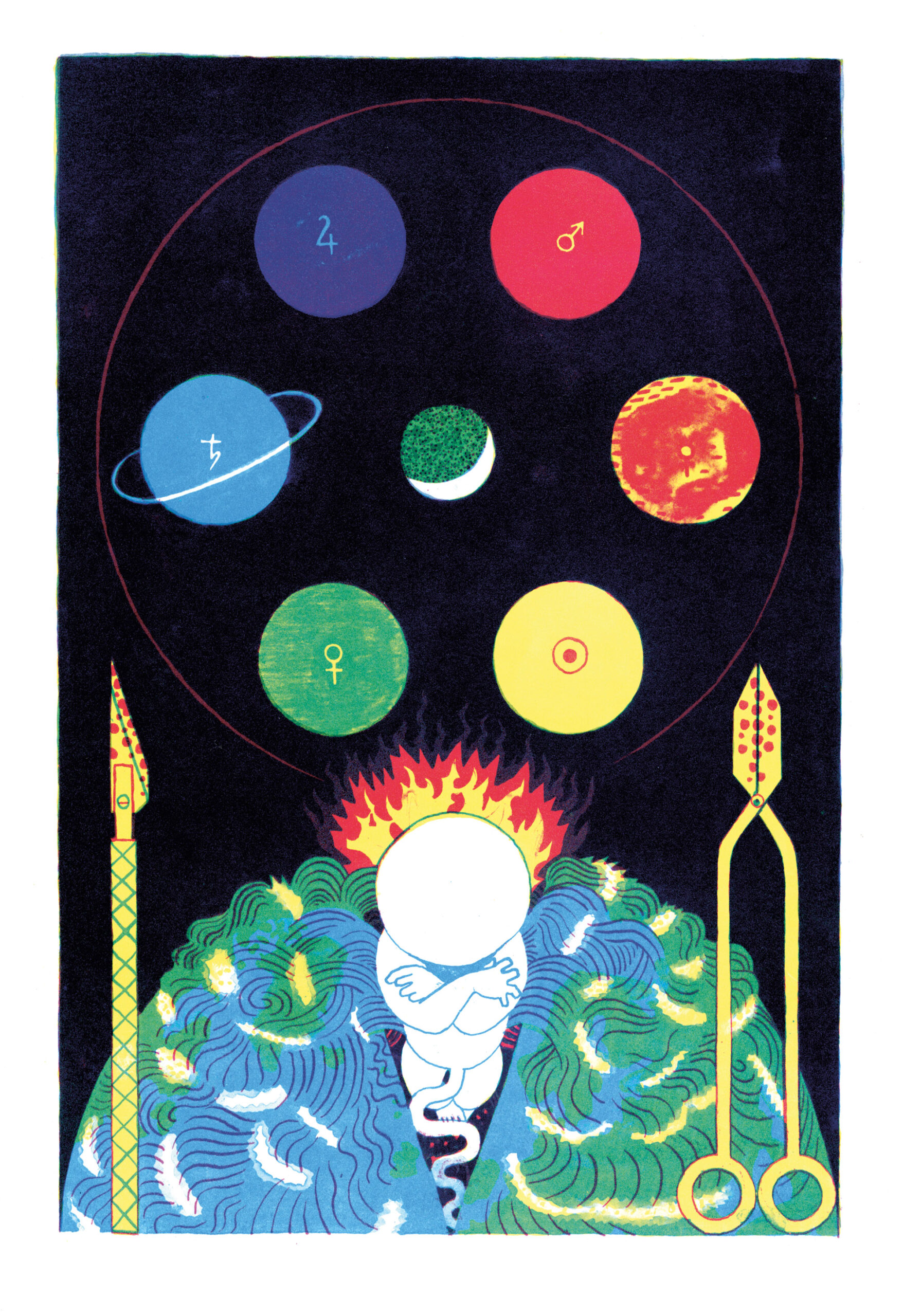
Evens: Sí, y hay una sensación de escalada. En ese sentido, tiene algunas similitudes con probablemente todos mis libros, pero sería más evidente con Panther, creo. En el sentido de que hay una relación intensa entre dos personajes. Una relación donde el peligro y la felicidad se mezclan y alternan, donde hay tensión, donde hay riesgo, pero también una relación amorosa. Algunos momentos extremadamente peligrosos son también muy tiernos, creo. Estoy pensando específicamente en el momento en que el padre opera a Arthur, o al menos lo somete a narcosis.
Vigneault: Yes, and Arthur at least believes that he’s been operated on, right?
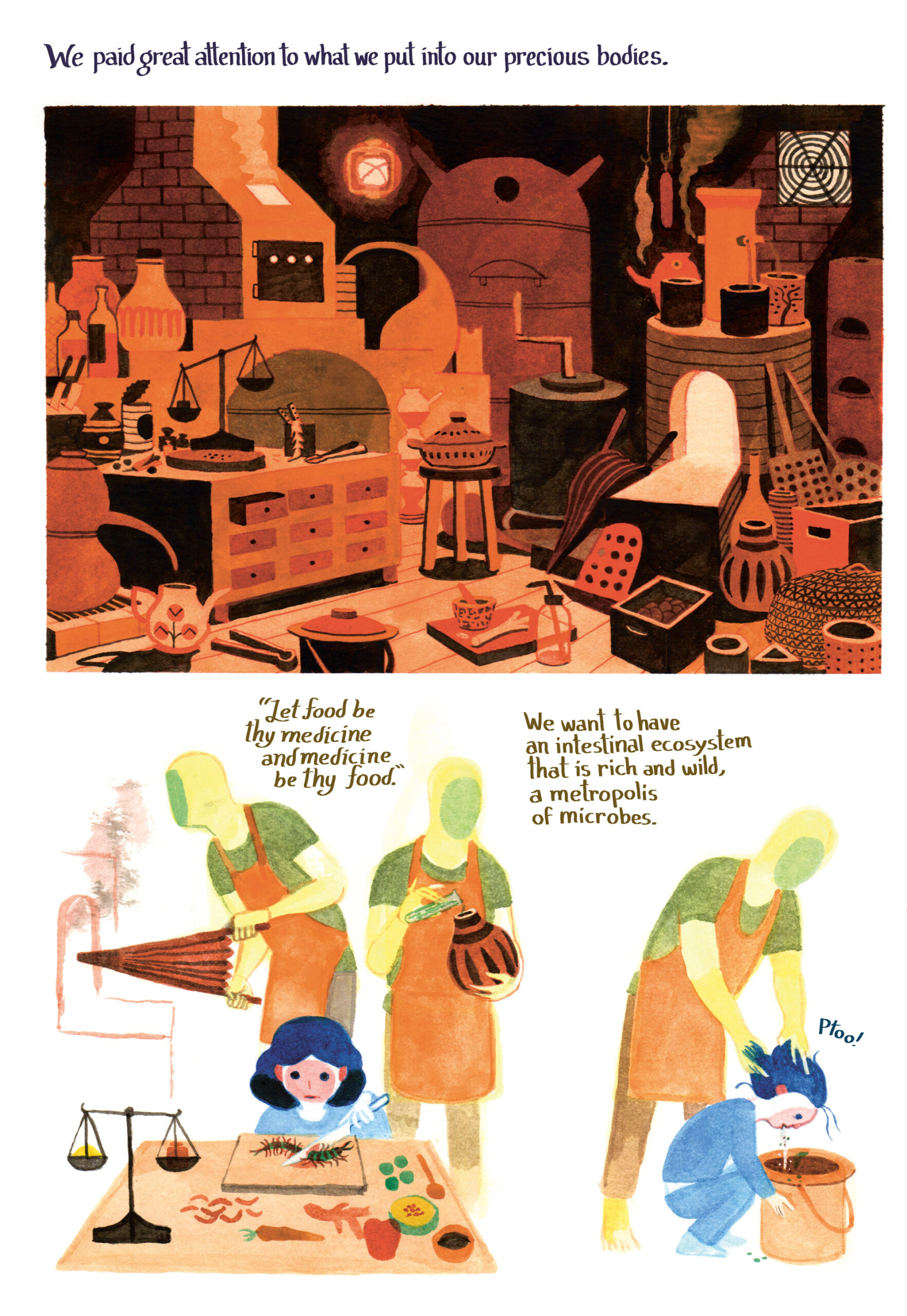
Evens: Sí, y se despierta con una cicatriz. Pero su padre realmente trata de, ya sabes, tranquilizarlo y parece genuinamente preocupado por su bienestar. Y esto no sería la única vez en que un padre inflige daño a su hijo con las mejores intenciones.
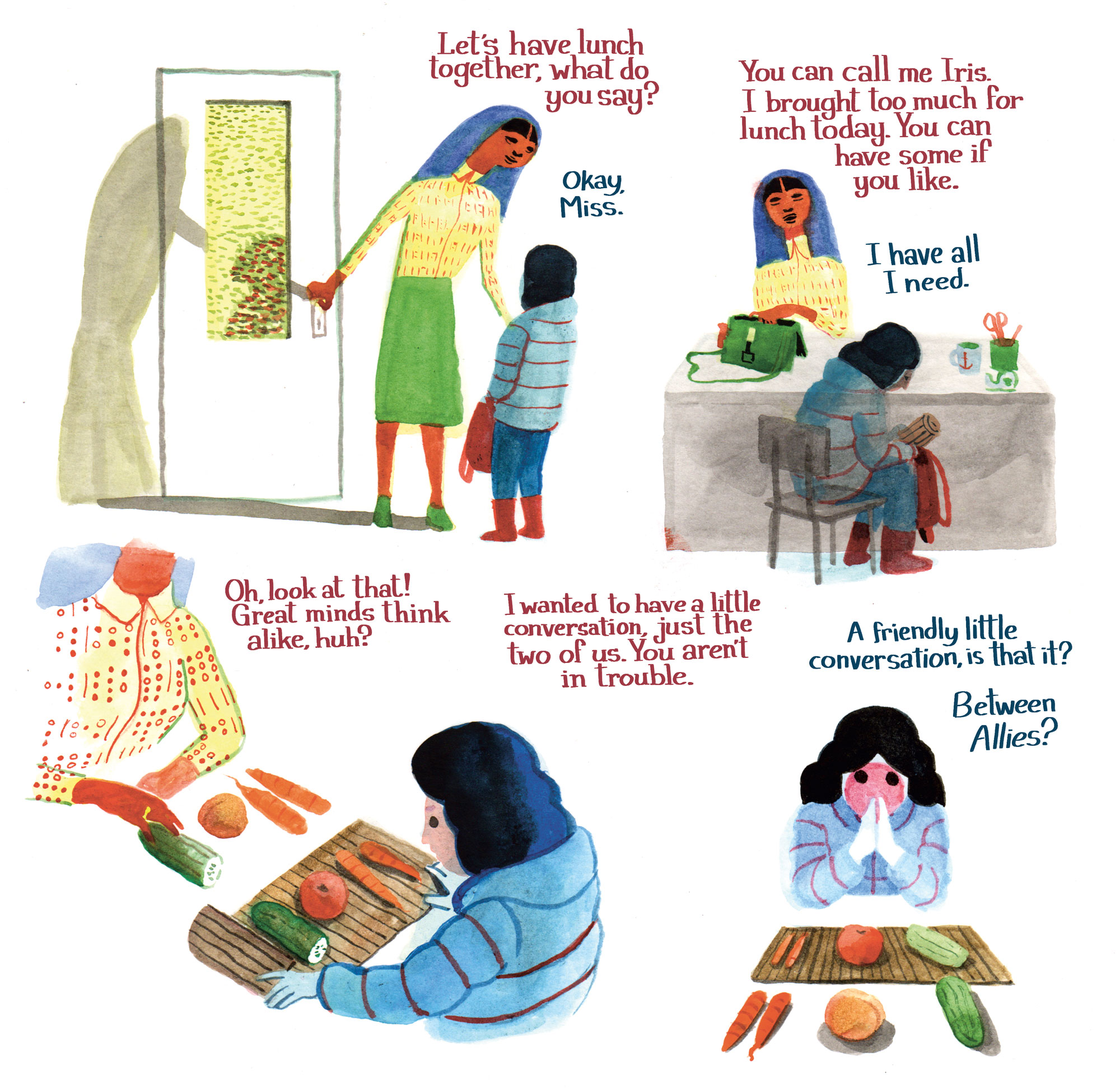
Vigneault: And you see this too in other scenes, there’s a very interesting and tender moment in The Jellyfish King with Arthur’s teacher, who is very concerned about him, and all of her words and even her way of relating to the world, it all flies right over Arthur’s head. He can’t interpret a quote-unquote “normal relationship” with his teacher. He has to interpret it through the context of a giant global conspiracy, and he can’t just have a normal interaction with her.
Evens: Yeah, he is a secret agent! He’s definitely taken his father very much at his word, and maybe even more than the father ever intended. That the world is all a sham, you know? That it’s all about a secret war. They’re on the battleground, and nothing is what it seems.
Creo que las mejores partes de la historia funcionan con una mezcla compleja de observación y cosmovisión. Es un libro que está dibujado, y el hecho de que yo lo dibujé todo, eso es lo que hace de esto un “producto cultural” muy específico, por decirlo así de forma torpe. Cuando pienso en cuál es la cualidad muy específica de The Jellyfish King, tiene algo que ver con eso, creo. Está tratando de hacer algo único relacionado con esa cosmovisión.
Vigneault: I was fascinated to hear you say that The Jellyfish King started as a paragraph in your notebook, because I was going to ask you a question if the images come first for you, or the words. Reading it I felt like the images were going to be coming first, and so I find it interesting that this started with the voice of Arthur—or a proto-Arthur—who is an unreliable narrator, but who also can’t rely on anything around him.
Evens: Having gotten this question a few times lately, I think that the good answer to “Does image or text come first?” is probably that all these stories come out of what we have in our head. The moment we put it on paper, it’s only then that we’re making some choices about text versus images. What we have in our head is, you might just call it “story stuff.” Writing is a very respected and much-used way of getting ideas on paper. Drawing is the slightly more eccentric little brother, you know? But even a novel writer—where that question would not be asked—probably has the same stuff in his head as I do, but it will go on paper as text immediately. For me it will use a bit of both. At first quickly, and then slowly, and afterwards, I clean it up, but at the beginning, in the notebooks, it’s all the same stuff, I think. It’s not clear how much is text or image.
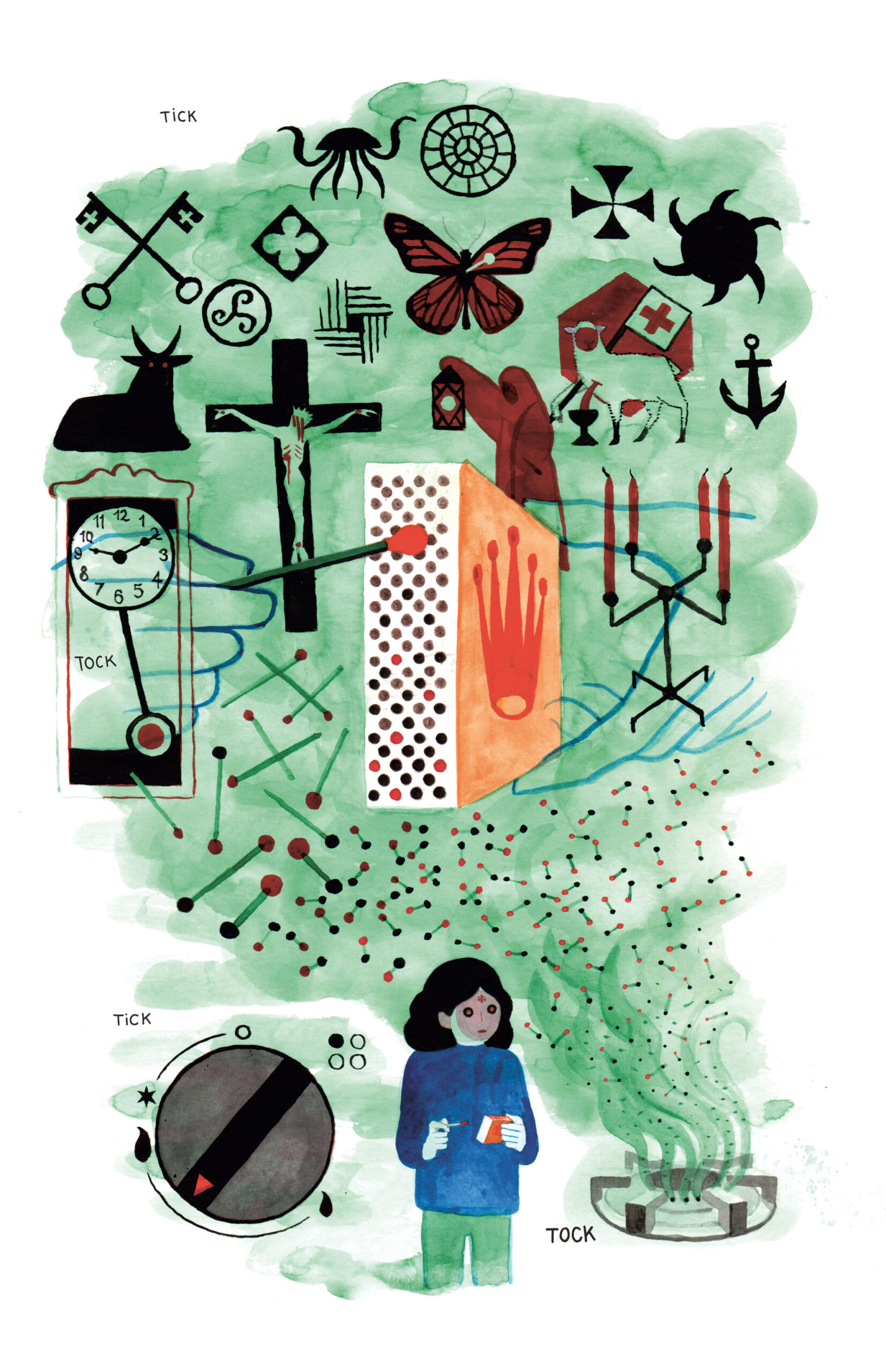
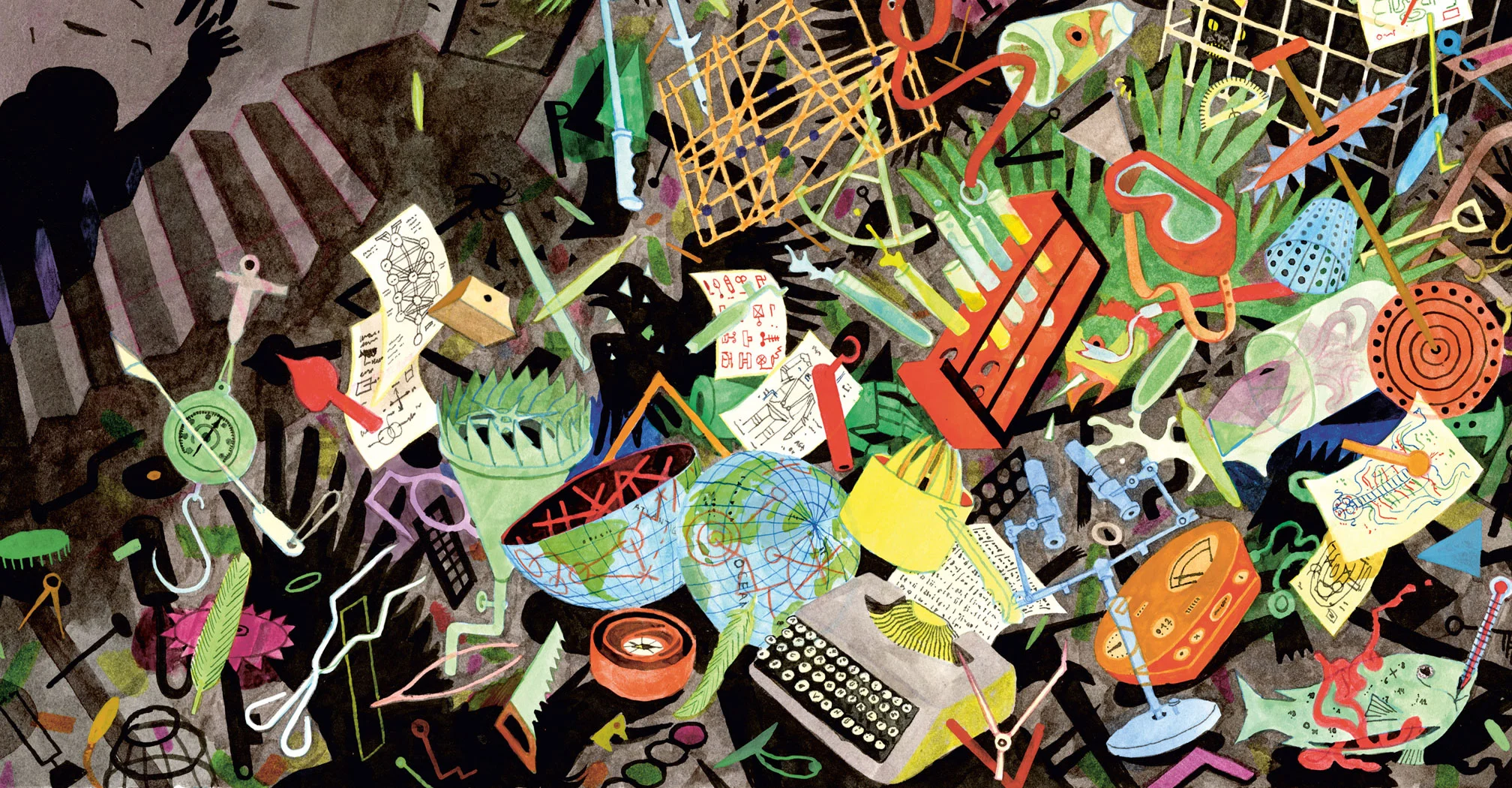
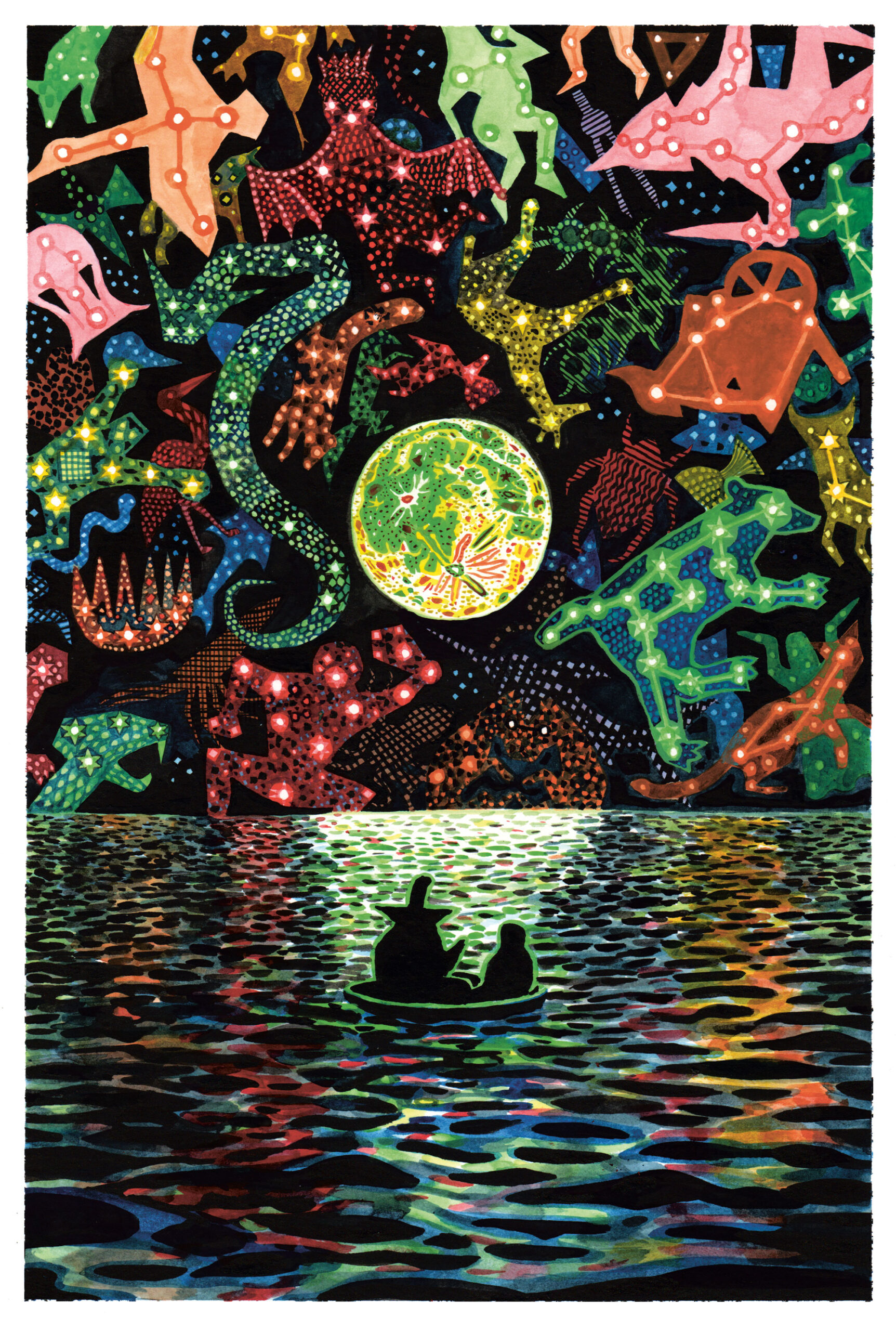
Vigneault: Your artwork itself has a sort of palimpsest quality, where there’s multiple layers of items, and little reference points, and little things for the reader to be looking at. Your environments are packed full of details. You can do a first read, and you kind of glance over things and say, “Oh, that’s a beautiful page.” But then you can do a second, and third, and be like, “Okay, there’s this item and where is this item entering into the story next?” This kind of quality makes it seem like you’re trying to capture the world in an encyclopedic way.
Evens: Yeah, there is more to be dug up in there on the second reading. I did take care not to put essential information in the second and third read, it’s more about background detail, or the little connections that are there. I try to be very purposeful about it this time. Other books I’ve made, some of them also have a lot of background detail, but here it is more personal.
Vigneault: That reflects what you were talking about, that paranoid worldview where everything has meaning and everything is about the main character.
Evens: Yeah, and I think for that reason, I wanted to be more consciously present in my decisions in the background, which, of course, triples the workload!
Vigneault: By chance, I’m currently reading The Name of the Rose by Umberto Eco.
Evens: ¡Oh!
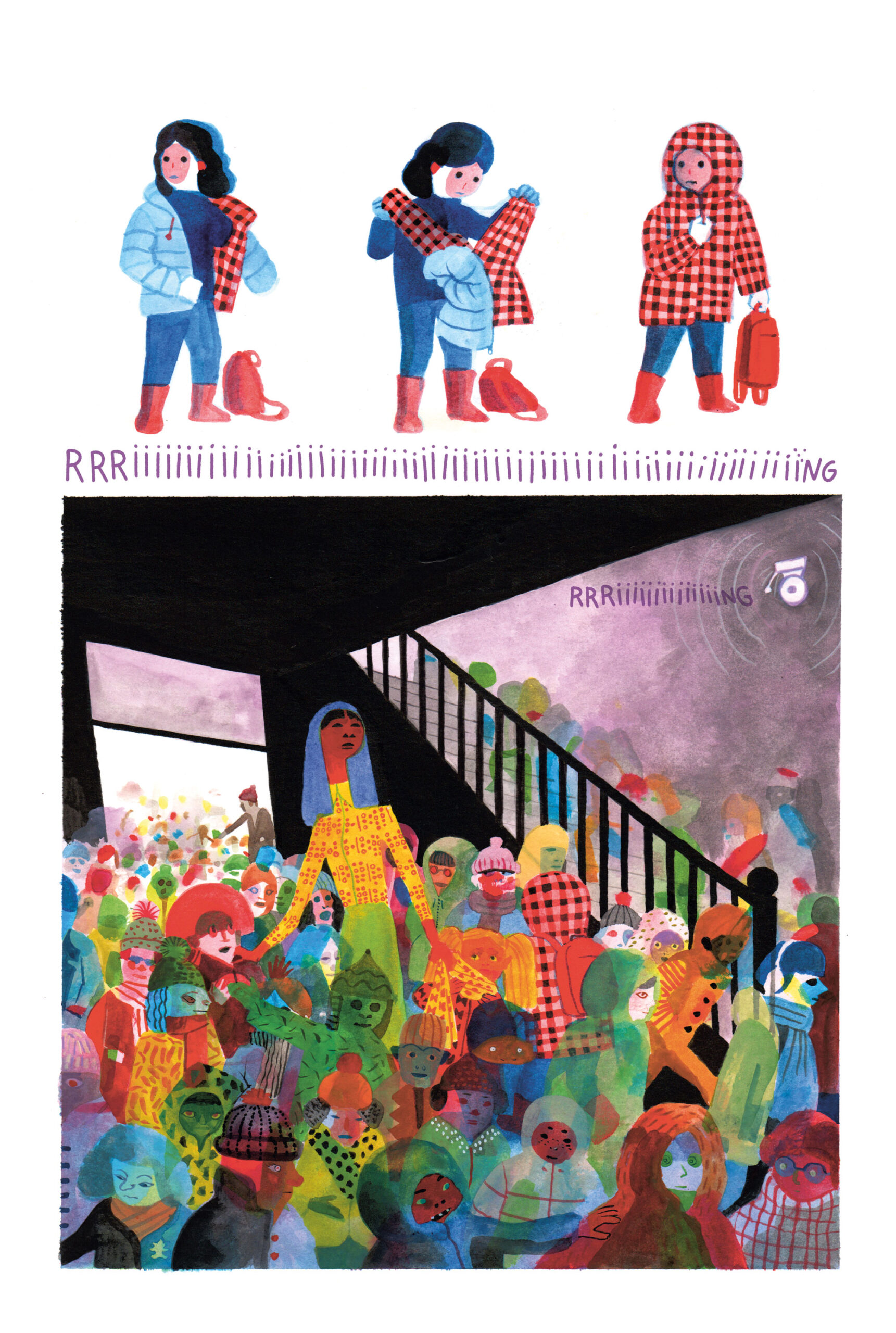
Vigneault: I remember when you and I were working on the lettering, you were often talking about the idea of an illuminated manuscript, the way the image and text interact. And The Name of the Rose connects with that, including calligraphy, translation, multiple layers of reference, religious ideology, Latin phrases, and things like that. It was surprising to feel a connection with your work on this book, and my work with you as a translator and hand-letterer.
Evens: Sí, Umberto Eco está definitivamente en esa pequeña lista de afinidades y referencias que tenía. Ya había leído The Name of the Rose, y leí Foucault’s Pendulum expresamente, porque había oído que tenía mucha conspiración en común con lo que estaba haciendo. No estoy seguro de que realmente haya influido The Jellyfish King al final, pero forma parte de una hermosa lista de lecturas.
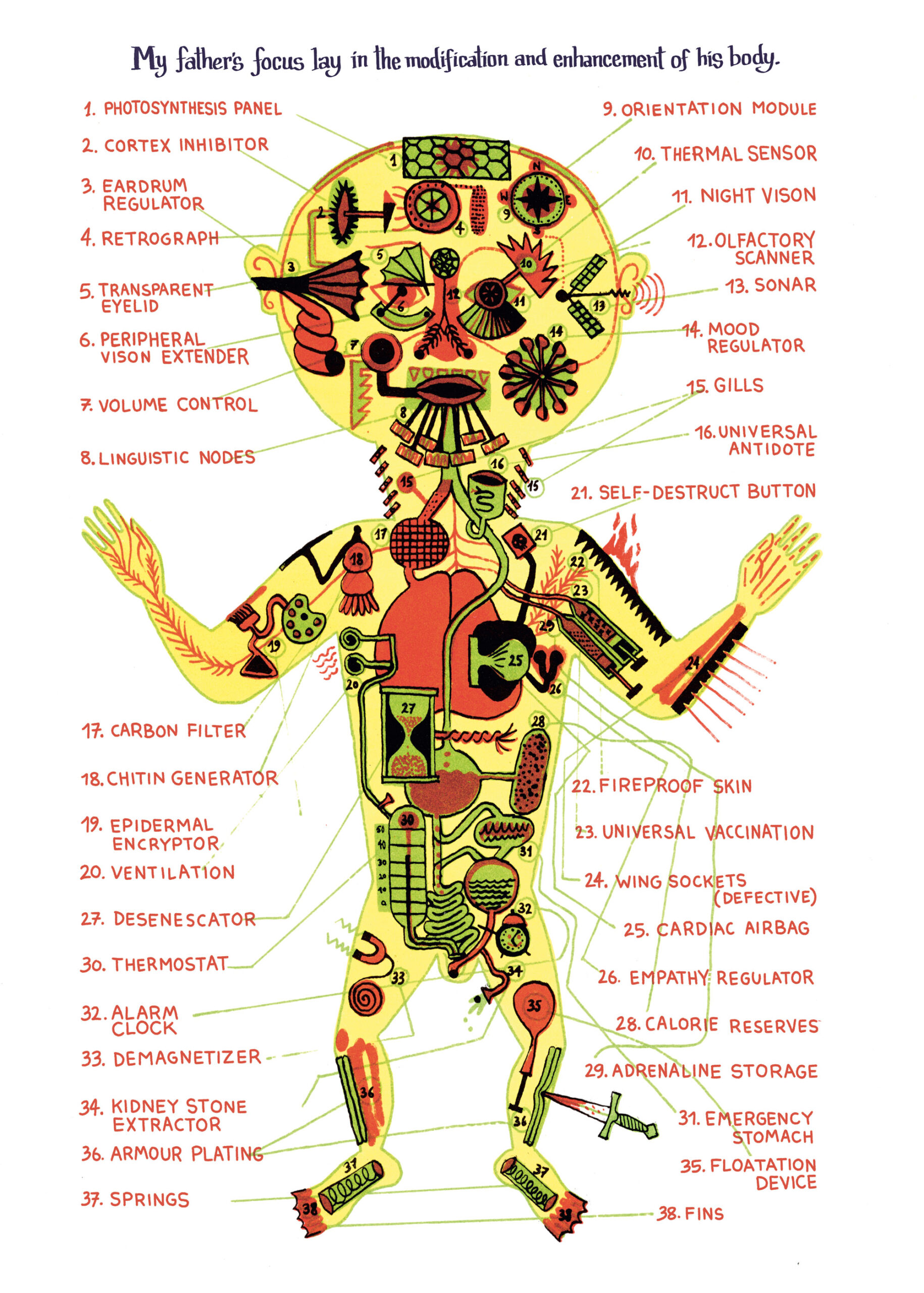
Vigneault: The Jellyfish King trata mucho sobre ideas de conspiraciones y maquinaciones, sobre el mundo persiguiendo al individuo. Vivimos en una época de paranoias crecientes y teorías de conspiración, se ha normalizado. ¿Cómo te sientes respecto a la presencia de tu libro en un momento así?
Evens: Sí, el libro empezó a desarrollarse un poco antes de que todo esto se volviera tan mainstream. QAnon explotó cuando se hizo enorme, cuando todos tuvimos que acostumbrarnos a la idea de millones de personas compartiendo teorías de conspiración. Y eso provocó nueva escritura sobre estos temas, nuevos ejemplos, y como autor me interesa mucho eso, así que me alegró escuchar podcasts sobre QAnon y cosas así. Pero el truco es cuidado: no dejarse arrastrar hacia la órbita de estas cosas recientes, no olvidar cuál es el germen real de este proyecto, que no son las ideas de millones de estadounidenses, ¿sabes? Es algo mucho más personal. Los ingredientes reales son las cosas que le dan sabor.
Vigneault: Yes.
Evens: Pero sí, recuerdo que hace años pensé: “Oh, quizá debería avanzar este libro más rápido, porque ahora van a salir 20,000 novelas de conspiraciones.”
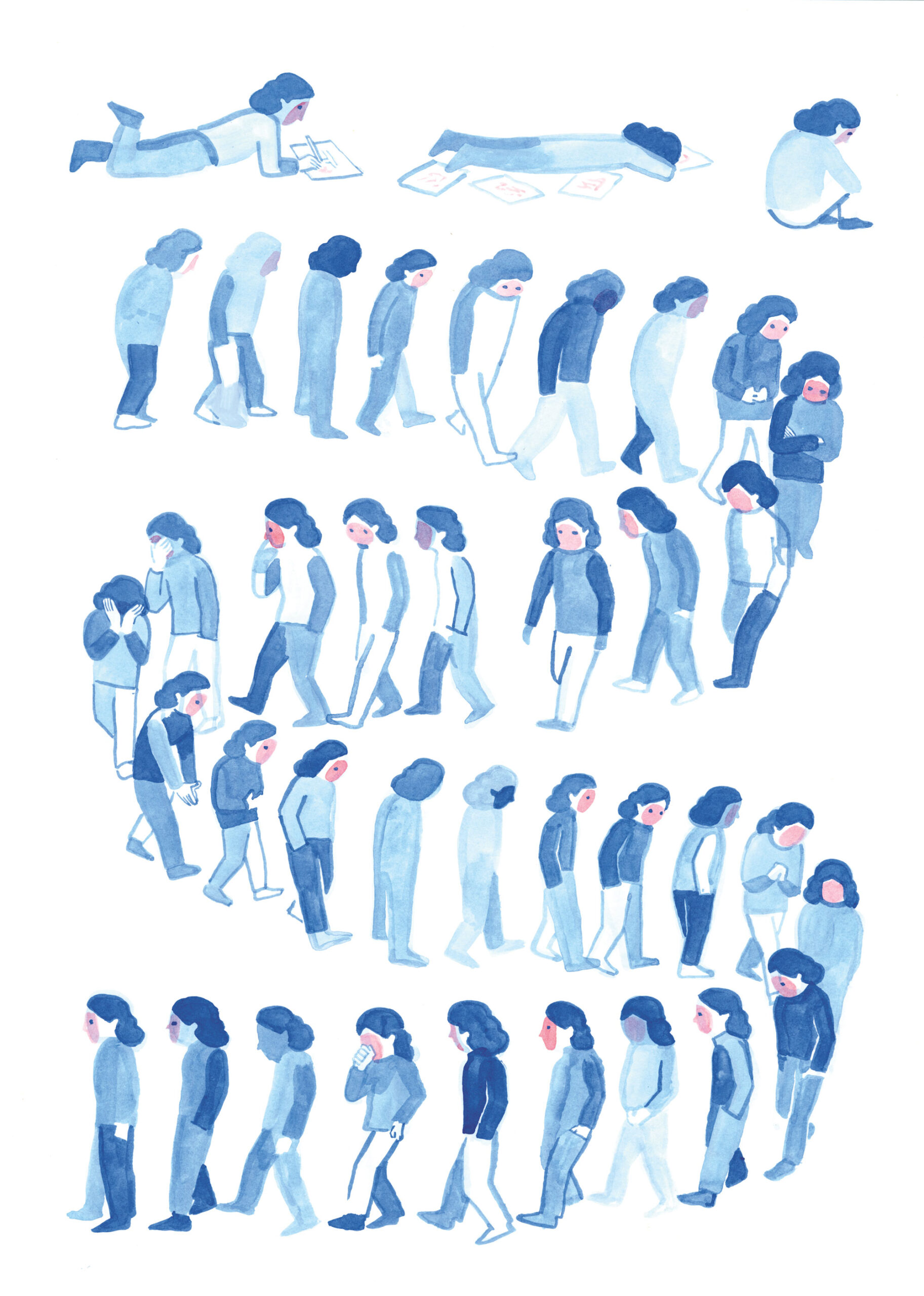
Vigneault: I think you’re right. It’s what’s personal that counts. In this book you’re really very much put into the mindset of a child, and we worry about the child, right? You’re afraid for him all the time, and I think that that’s one of the powerful things about the book.
Evens: Tienes razón. Una gran parte del mecanismo de la novela es que es protagonizada por un niño. Arthur se imagina a sí mismo enfrentándose a cosas grandes, ¿sabes? Enfrentándose a cosas malvadas grandes. Y como él es un niño, en realidad está enfrentándose a un mundo enorme. Todo es más grande que él, está lidiando con adultos y cosas así, así que es doblemente cierto. Si el protagonista paranoico hubiera sido alguien como yo, sería como: “¿Cuándo va a abrir los ojos este tipo?” Con el niño, él aún enfrentará un mundo grande y aterrador, de cualquier manera. Y, medio en broma, lo comparo un poco con lo que funciona en The Lord of the Rings. Probablemente no es casual que el protagonista sea un personaje de tamaño infantil.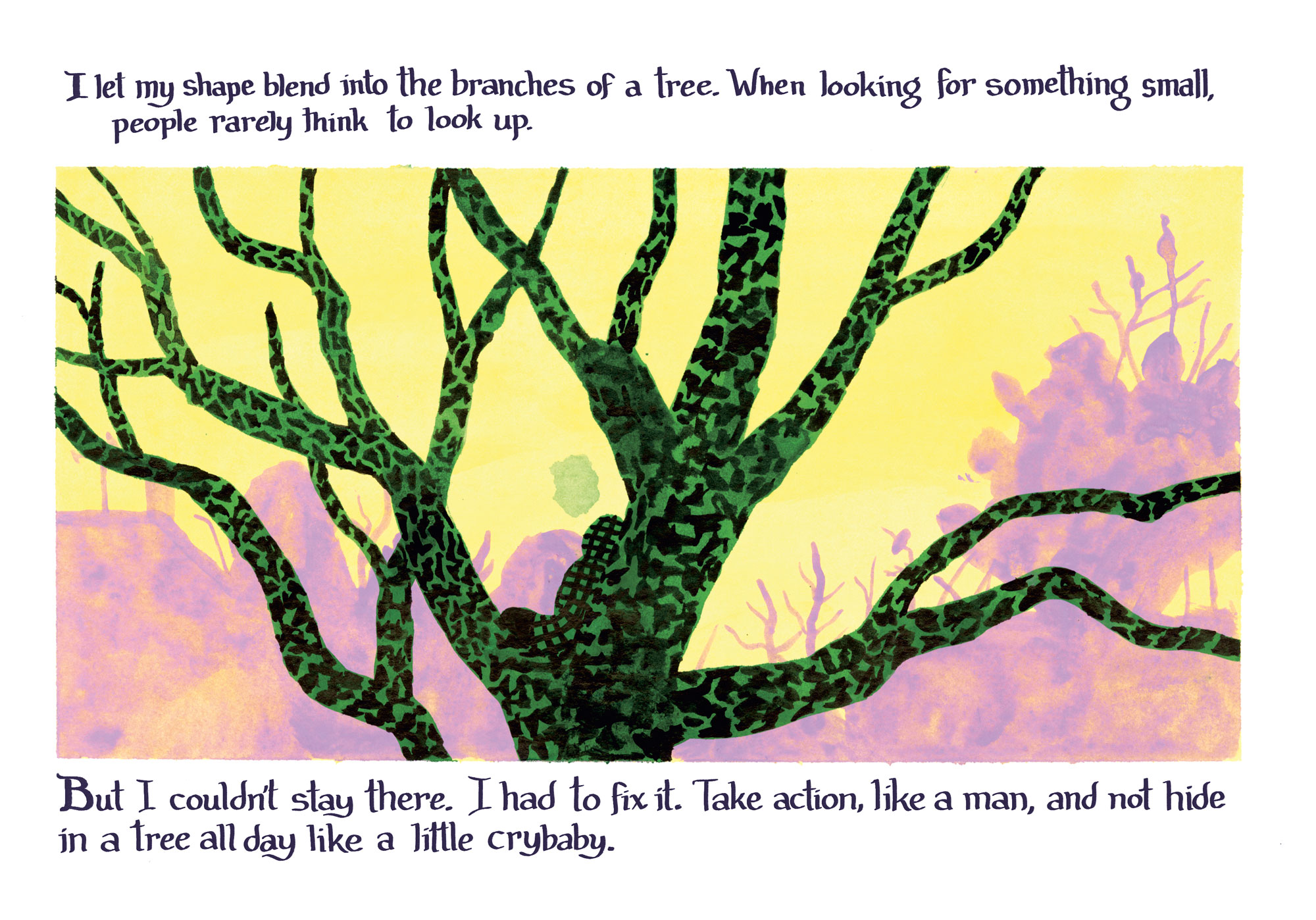
Vigneault: And the danger is not imaginary. A child did not create the world that they live in, and yet they have to learn to live in it, they have to learn to navigate it, and they should fear it in some ways, but they also have to have some sort of hope.
Evens: Quizá con la conspiración volviéndose tan mainstream y con todo lo oscuro que ha ido la política mundial, todo eso probablemente influye en mi pensamiento sobre el libro. Por ahora, esta isla en la que ocurre la historia sigue protegida narrativamente de algunas de las cosas que pasan en nuestro mundo. Creo que este libro podría haber ocurrido en los años 90, o algo así. Parece que este es un pequeño rincón de Francia donde las cosas van bien, hay políticos normales en el poder. Es algo en lo que he estado pensando últimamente. Esa es otra capa que espero no complique la obra diez veces más.
Cualquiera que sea la cantidad de realismo que ponga allí, sigue siendo una caricatura. Siempre será una caricatura, aunque trabaje 15 años en esta trilogía. Porque es un libro de cómics, habrá todas estas pequeñas elecciones para facilitar la legibilidad, la claridad, la belleza, la estética. Por ejemplo, si dibujo una máquina de café, probablemente dibujaré una máquina de café muy arquetípica, para que el lector la entienda rápido y esté a bordo. No voy a fijarme en un diseño reciente de una máquina de café.
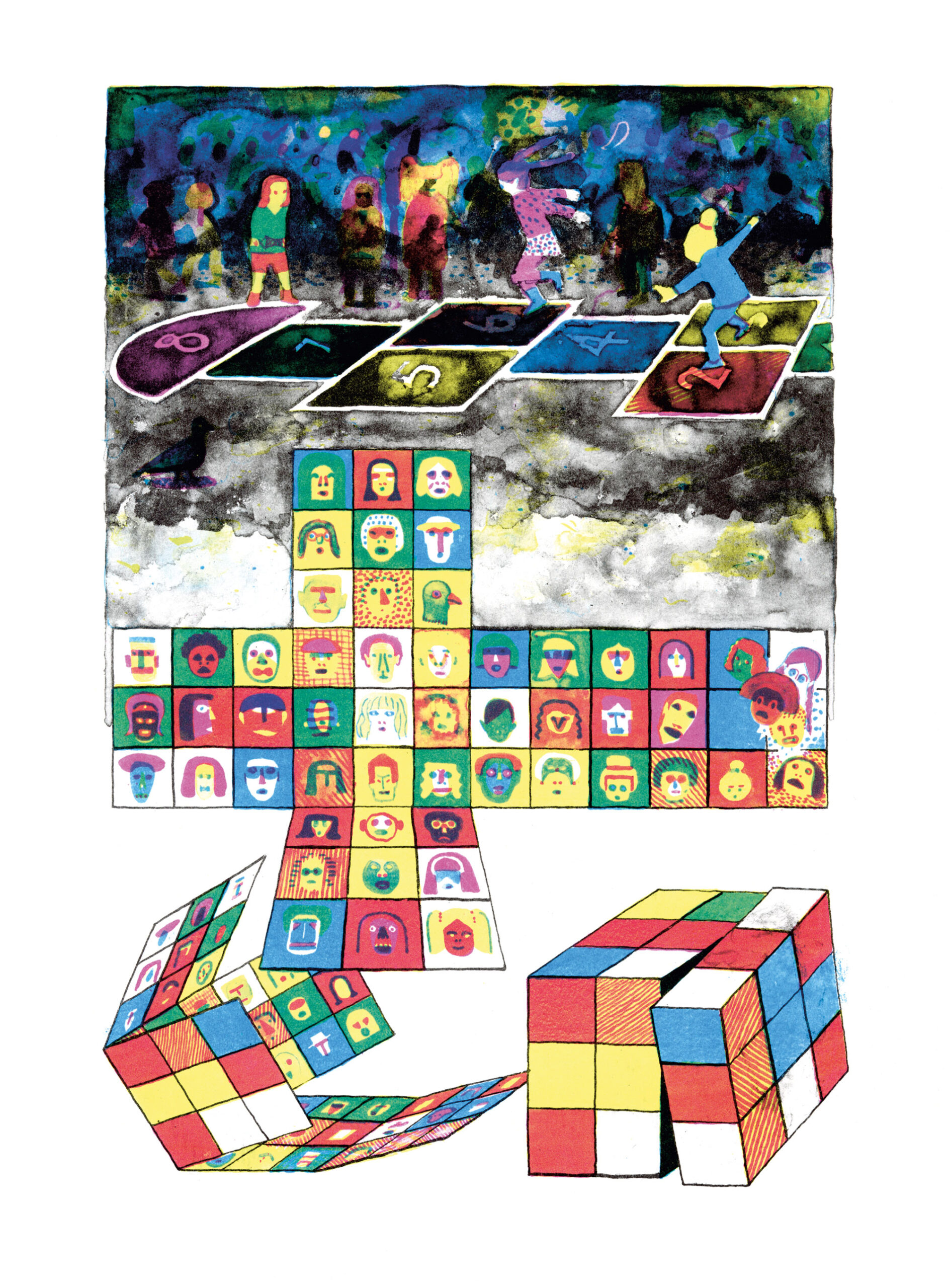
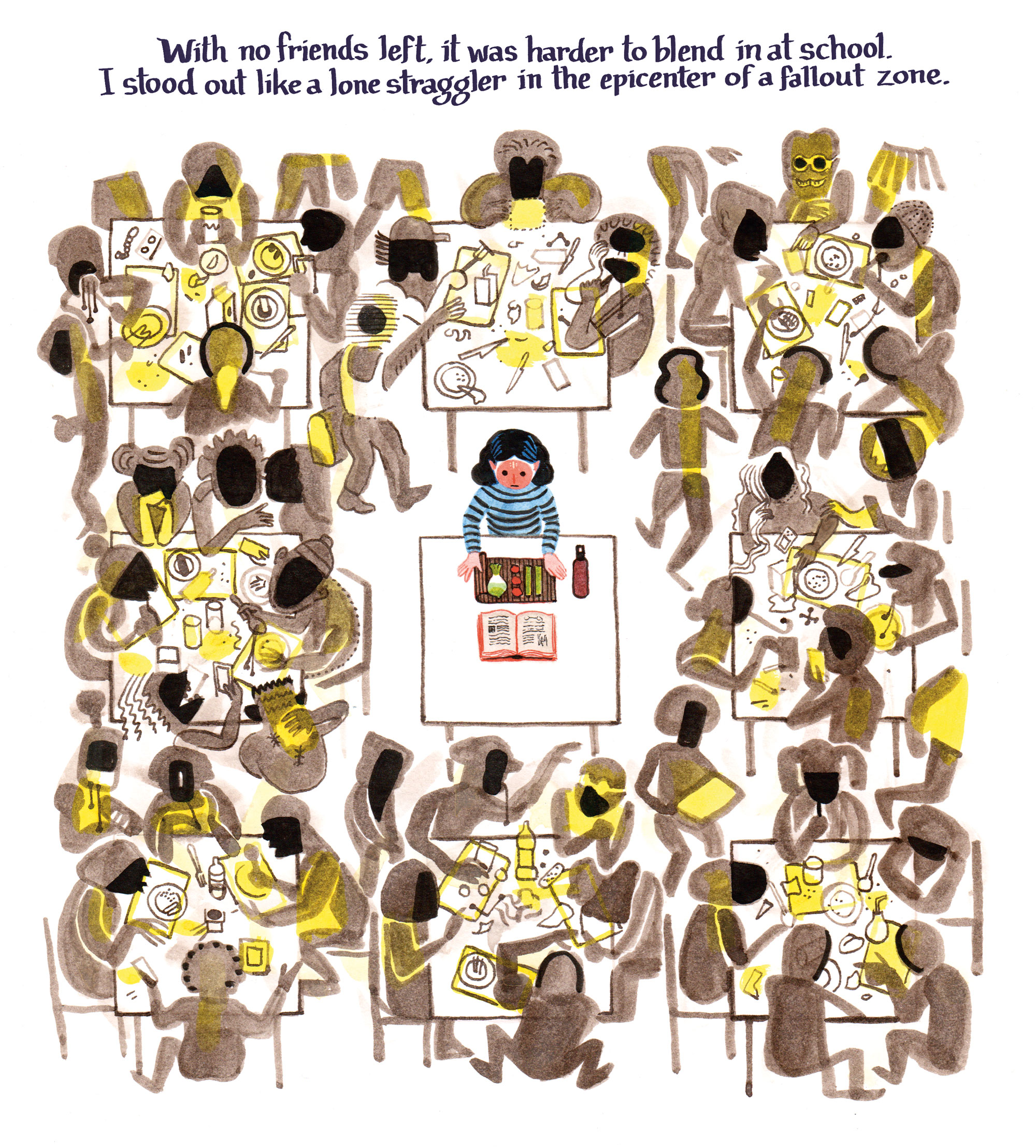
Siento que hay algo curioso en el hecho de que esté escribiendo un libro sobre personas que, como muchos de nosotros, tienen visiones del mundo simplificadas. Hay un momento que se ilustra en el libro, por ejemplo, una imagen áspera de niños jugando en el patio de recreo, y luego el pensamiento de Artur, que coloca a todos estos niños literalmente en pequeñas cajas de colores que se doblan como un Cubo de Rubik. Es una ilustración de esa categorización y simplificación del mundo para ajustarlo a nuestros cerebros, ¿sabes? Pero todo el libro inevitablemente estará haciendo algo parecido, ¿sabes? Cualquier coche que aparezca probablemente se verá como coches bastante típicos, muchos arquetipos.
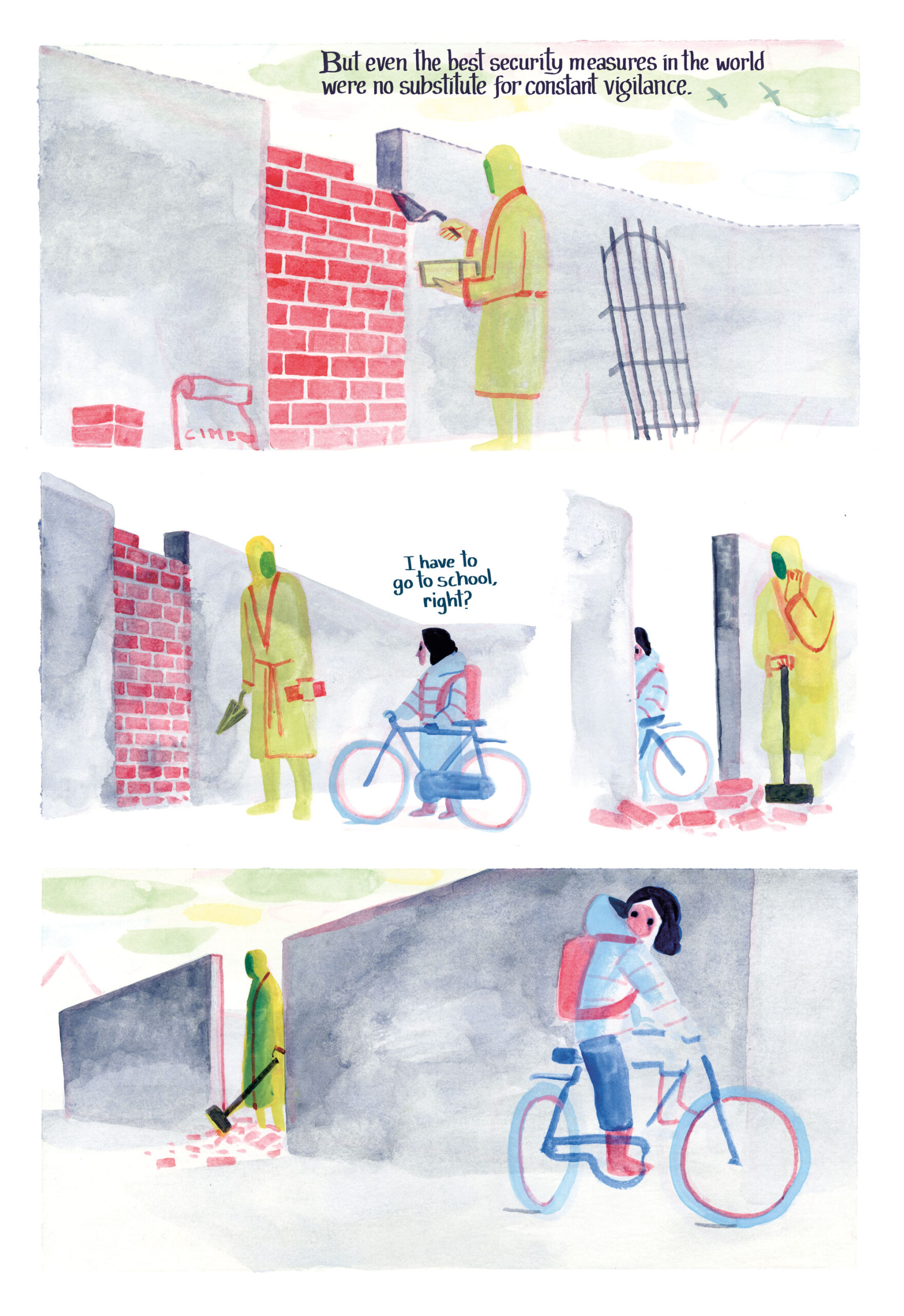
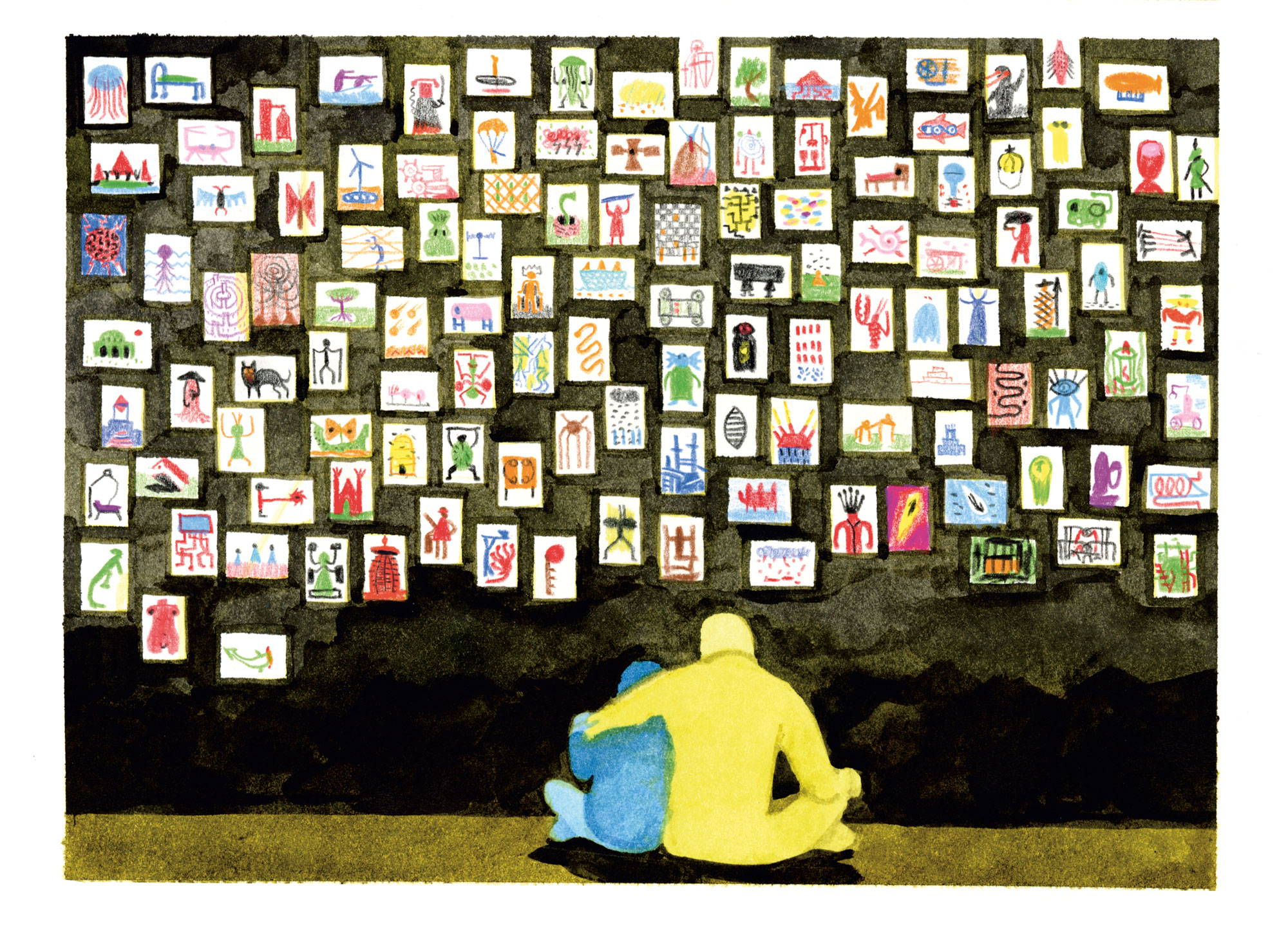
Vigneault: People might not realize how much simplification and how much classic cartooning is going into this book. It’s a bit of a hybrid form, you’ll have pages that are full paintings, you’ll also have pages that have no panels, you have the lettering, which kind of flows in and out and is done with colors. You’re pushing the form in certain directions, but at the core of it, you know, you also have very cartoony elements. You’re even connecting with children’s art, I think, quite explicitly. Arthur is himself an artist. There’s an important scene at the beginning of the book where he can’t connect with his father verbally or through writing anymore, but he’s able to connect with him through the power of illustration and the power of art, which I think is very much speaking to the role of comics. That’s one of the reasons why it’s a universal art form in many ways.
Evens: La historia tiene una gran excentricidad; los personajes y los acontecimientos tienen mucha extrañeza. Así que me obligo a ser bastante claro y legible en cómo la cuento. Al menos, espero que se pueda percibir. Realmente he intentado no complicar cosas que no valen la pena complicar. El texto tiene que ser muy legible, la acción no debe ser difícil de leer. No quiero que el libro esté al nivel de un “lector experimentado de novela gráfica”, ya sabes. No me interesa que sea un libro difícil e inaccesible. Quiero que sea muy accesible, así que hay mucho cartooning en ello, me parece. Esto no significa que esté siendo Picasso, ¿sabes? Tengo algunas cosas que este libro debe lograr, y el arte y la belleza deben fluir a partir de eso.
Vigneault: Absolutely. Although Picasso loved the Katzenjammer Kids! I think you can see the cartoon influence in his work, too. On a more personal note, you became a father recently.
Evens: Sí.
Vigneault: And I was thinking that this must have some influence on how you’re regarding this book. You were a son, and now you are a father. How does that affect how you view The Jellyfish King and the future installments of this trilogy?
Evens: Estoy trabajando en el segundo libro. Esta cosa está absorbiendo una cantidad absurda de trabajo; ya está tomando años más de lo que esperaba. En comparación con los grandes saltos que mi hija ha estado haciendo en apenas un año y medio, es ridículo ver cuán lento va este libro. Ella irá a la guardería, eh… ¿Preescolar sería la palabra? Guardería. Está empezando la sección para los grandes. Mientras tanto, no sé, he dibujado tal vez 30 páginas terminadas en su vida hasta ahora.
En la parte de la historia que he estado escribiendo, el padre está casi completamente fuera de escena. Así que este tema del padre no está filtrándose de forma directa en el libro. Aunque hay un bebé ahí, de pronto, ¡eso no estaba antes, debo admitir! Pero es temprano para decirlo, tiene mucha influencia en mi vida de muchas maneras, pero aún no puedo precisar todas las formas en que está influyendo en la serie The Jellyfish King. Realísticamente, a la velocidad a la que voy, de principio a fin, esta trilogía probablemente será un proyecto de 15 años. Comenzó a finales de 2018. Ya llevamos 8 años en ello.
Vigneault: It goes by fast. I think you have a certain allowance for improvisation and evolution in your work, so I’m sure that you’ll surprise yourself, and you’ll surprise your audience as you go forward.
Evens: Mientras vea cosas que puedan mejorar, mientras estas ideas sigan fluyendo, nunca he tenido la costumbre de cerrarlas artificialmente. Quizá ya debería aprender a cerrarlas de forma artificial. Pero la máquina sigue funcionando.
Vigneault: I love that. And I’d love to talk to you ad infinitum. We didn’t even get into the work that we did together on the translation of the book, and the differences in English, French, and Flemish. But we’re out of time for this interview.
Evens: Sí, mis respuestas también se han alargado mucho en los últimos años. Y son bastante digresivas.
Vigneault: I love the digressions, and I’m sure that the readers of this and the book itself will love following along.
Evens: Sí, y por favor menciona en la entrevista lo feliz que estoy con tu trabajo en la traducción y en la letra. Te agradezco mucho por las horas locas que has dedicado a esto también.
Vigneault: Oh, no, it’s an inspiring project, I’m happy to be on this journey with you. It really was a big project, it was a lot of work, and now I’m really excited to see it come out in the real world, and I can’t wait for people to read it.
Evens: That’s fun about books, right? They exist in the real world.
Vigneault: And you never know what’s going to happen to them afterwards. They go off and have another life—maybe as the underlying layer of some new palimpsest.
Evens: They can literally be under a table leg, or stopping a door.
Vigneault: That’s a noble work for a book. Especially this one! It’s a good size. Chunky!
Evens: Yes!
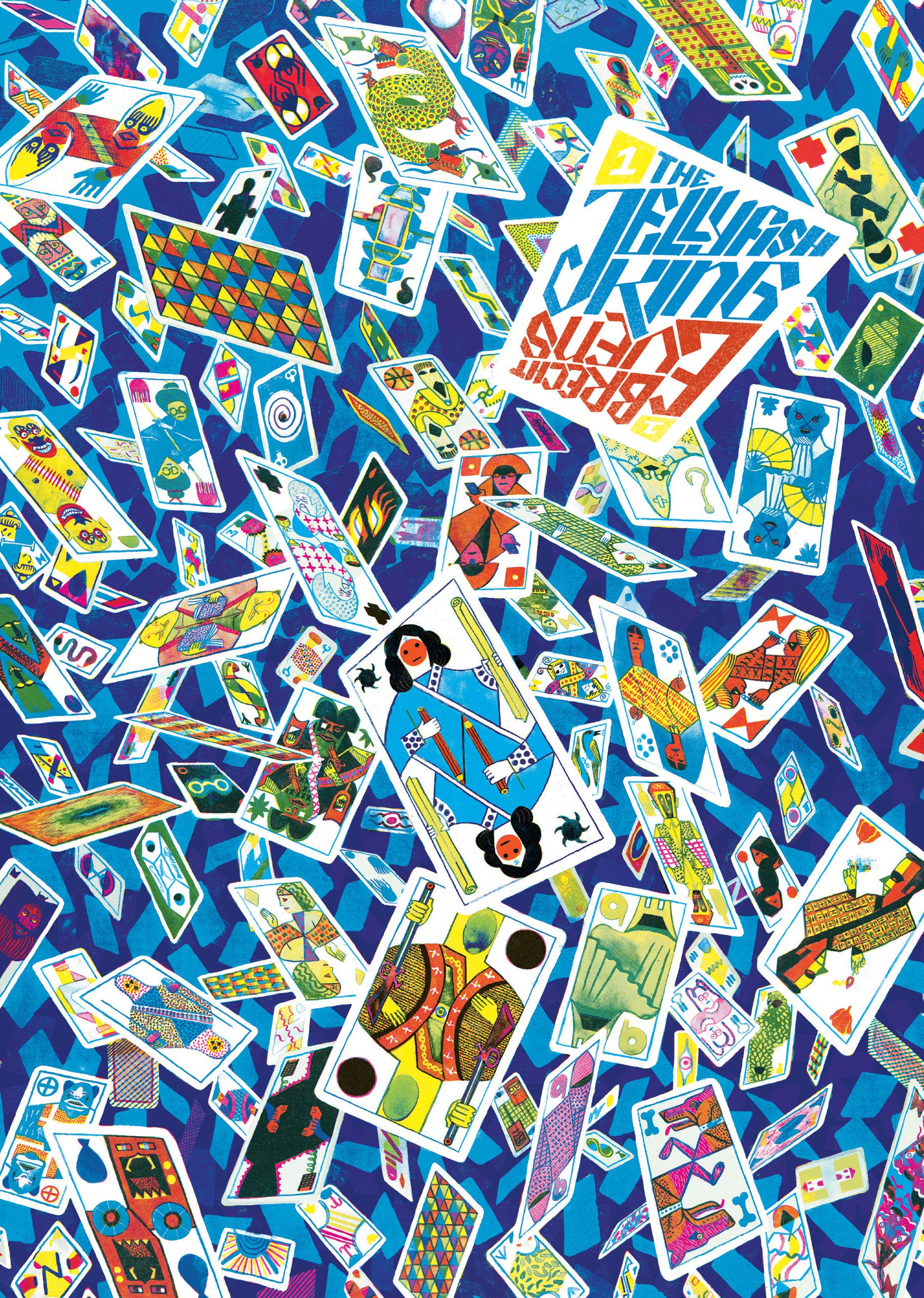
The Jellyfish King is scheduled for publication on October 6, 2026.